
ORIC — Grand Asian University ORIC Office of Research, Innovation & Commercialization

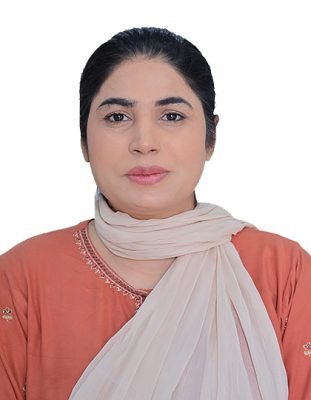
Prof. Dr. Tariq Hussain

Home Faculty Prof. Dr. Tariq Hussain

Biography will be available soon.

  • Development Economics, Institutional Economics, Governance

  • Macro Economics, Managerial Economics, Development Economics, Applied Econometrics

  • Islamophobia, Populism and Peace in the Perspective of Relinquished Financial European Economies: A Systematic Review, Volume: 27 Pages: 92-104 Year: 0 Impact Factor: 1.08 Publisher: Universiti Kebangsaan Malaysia Press (Malaysia) Type: International D O I: 10.24035/ijit.27.2025.320 Paper Type: Article Abstract: Dwindling capitalism and its offshoot democracy upsurge populism, which has various forms and tries to adjust all the rising issues of social sciences. Populism, in the political arena, the division of "us" and "them" is like drawing an invisible unbroken line among humanity. The scope of this study, based on a complex web of Islamophobia, populism, and peace, is to investigate the role of financial challenges in European economies. Hence, by studying literature between 2018 and 2024, the study delves into Islamophobian and populist facts in countries faced with economic exhaustivity at their foundation, elements, and effects. By scrutiny, major factors expose the importance of ideological applied constructions, historical contexts, as well as political narratives catering for the victimization of Muslims and culminating in the right-wing populist movements. Also, the discussion on Islamophobia covers the contribution of media discourse and digital platforms in raising Islamophobic emotions together with the loss of tolerance and cultural cohesion. In the same way, the paper also addresses the dynamics between politics and religion, looking at instances where Islamophobic sentiments are used by populist parties to gain at the polls, among other things, with an eye on how this affects the peaceful relations between all the groups in a given union. This review has helped to demonstrate the mechanisms of the development of Islamophobia and populism following financial crises in the European economies and how this can be attenuated in such societies. Keywords: European Economies, Peace, Islamophobia, Populism Journal Name: International Journal of Islamic Thought Issue No: June Published: 15-Jun-2025 W O S Quartile: Q2 Scopus Quartile: Q2 Complete Citation: 2
  • Fiscal Policy Cyclicality, Governance, and Quality of Institutions Nexus in Ireland Volume: 17 Pages: 111-119 Year: 0 Impact Factor: 0.8 Publisher: Economic Laboratory Transition Research Podgorica Type: International D O I: 10.14254/1800-5845/2021.17-3.9 Paper Type: Article Abstract: Purpose: The relationship between income and government consumption expenditure would reflect the nature of any country's fiscal cyclicality. This study aims to pragmatically evaluate the cyclicality of the fiscal dogma in Ireland and test the role of political institutions, economic institutions, and governance on the cyclicality of the fiscal policy in Ireland. Methodology and Approach: The 3-Stage Least Square technique is applied due to possible endogeneity in the model. Findings: Ireland's fiscal dogma is found as countercyclical in the presence of effective political and economic institu-tions with highly-structured and well-functioning governance. A negative relationship is observed between income per capita and government con-sumption expenditure. Hence, countercyclical fiscal policy is corroborated. Moreover, the lag of government consumption and the real interest rate reduces the present government consumption. Local and foreign investments, economic growth differences, government revenues, imports, and population growth have positive effects on government consumption expenditures. Based on findings, we recommend that the Irish government strengthen the quality of institution and governance to support the phenomena of its fiscal policy's counter cyclicality for a smooth fiscal policy in the country. Keywords: Cyclicality of the fiscal dogma, Political and economic institutions, Governance Journal Name: Montenegrin Journal of Economics Issue No: 3 Published: 15-Mar-2022 W O S Quartile: Q3 Scopus Quartile: Q3 Complete Citation: 4
  • Infodemics: A Post Pandemic Perspective Of Covid-19 Volume: 18 Pages: 3903-3912 Year: 0 Impact Factor: 1.61 Publisher: Info Sci Publisher Type: International Paper Type: Article Abstract: Infodemic is the term used for information regarding pandemics and spreads faster than actual pandemics. This information can be real or fake, which makes people confused about how to respond to a pandemic. The purpose of this study is to identify such fables and infodemics that prevailed during and after the covid-19 pandemic. The descriptive methodology was used to describe the phenomenon, and the data came from various articles and reports. The study found many fables regarding precautions, treatment, and spread of covid-19. These fables affect the thinking of people regarding covid-19 and the way people live. There were also many consequences of these infodemics found, like their effects on the economy, psychology impacts on human life, and many other normal activities suffered. The study has various implications for government and health authorities to educate people properly so that these infodemics do not adversely affect human life and recommends that people avoid irrelevant information during pandemics and crises. Keywords: Infodemics, Covid-19, Pandemic, Lock Down, Psychological Effect Journal Name: Webology Issue No: 6 Published: 15-Sep-2021 W O S Quartile: Q2 Scopus Quartile: Q2 Complete Citation: 2
  • Corruption, Governance, and Government Revenue Volume: 13 Pages: 122-133 Year: 0 Publisher: University of Karachi, Karachi, Pakistan. Type: National D O I: org/10.46422/jhss.v13i2.228 Paper Type: Article Abstract: This study analyzes the complex relationship between corruption, governance, and government revenue. It explores some of the collective influence approaches to corruption and Governance on Government revenue. The panel data of ninety-six countries from 2005 to 2020 is being collected from the Corruption perception index (CPI), World development indicator (WDI), and worldwide Governance indicators (WGI). For the analysis, panel data fixed effect and D&K technique is used among corruption, governance, and Government revenue. The findings show that corruption significantly and negatively affects government revenue, while governance significantly and positively impacts government revenue. So, the government needs to improve the governance quality to enhance the tax revenue and control the corruption level in the economy. Keywords: Corruption, Revenue, D&K technique, WDI Journal Name: The Journal of History and Social Sciences Issue No: 2 Published: 31-Dec-2022 Complete Citation: 25
  • Can Piketty’s Interest Rate – Growth Rate Framework Explain Increasing Income Inequality in Pakistan? Volume: 13 Pages: 821-829 Year: 0 Publisher: OJS/PKP Type: National D O I: org/10.61506/01.00276 821 Paper Type: Article Abstract: Inequality in income distribution has important ramifications for economic growth, development, and social justice (see Atkinson (2000), Piketty (2013), Milanovic (2016), etc.). Piketty (2013) explains the phenomena of growing income inequality in high-income countries by comparing the interest rates (r) and growth rates (g) over time. The crux of the argument is that since the upper income groups generate a significantly greater proportion of their income from investments as compared to lower income groups (due to higher savings rate compared to lower income group), interest rates performing better than the national income growth rates in the high-income countries in the post-cold war era (r-g) explain growing income inequality in these countries. This paper examines the use of this methodology to explain income inequality in Pakistan. It compares the evolution of income of the top 20 percent of Pakistan’s population with the income of the bottom 20 percent, using Piketty’s lens of interest rate growth rate dynamics. Empirical results show that r-g methodology does not capture the income distribution dynamics of Pakistan. Upper income group appears to be negatively affected by increases in interest rates as compared to the lower income group. Prices, international trade, taxes, and financial development tend to be the leading reasons for reducing the impact of r and g framework to explain the income distribution. This paper makes novel contributions to the methodology and implications of Piketty’s framework for studying income inequality in small, open, less developed countries like Pakistan. Keywords: interest rate, growth rate, top 20 percent income, bottom 20 percent income Journal Name: Bulletin of Business and Economics, Issue No: 1 Published: 28-May-2024
  • Role of Human Capital Sustainability Leadership in Employee Wellbeing: A mediating role of Perceived Organizational Support Volume: 3 Pages: 34-42 Year: 0 Publisher: GCLT (Global Center for Legal Thought), Islamabad Type: National Paper Type: Article Abstract: The core objective of this study is to examine the part of Human capital sustainability leadership towards employee wellbeing. Moreover, its secondary purpose is to investigate the impact of Ethical leadership, Sustainable leadership, Mindful Leadership and Servant Leadership on employee’s subjective & psychological wellbeing in the presence of Perceived organizational support as mediator. The Quantitative method was used in this study using Stratified random sampling technique from 382 front line employees of all conventional banks operating in Lahore. For the purpose of data analysis IBM SPSS statistics 25 version is used. The results assert that all independent variables have positive impact on dependent constructs. Perceived Organizational Support (POS) is an immediate outcome of human capital sustainability leadership. POS gives rise to an employee’s subjective and psychological well-being. The aforesaid findings reveal that human capital sustainability leadership boosts both subjective and psychological well-being of employees only through POS. The research is conducted by examining the impact of four variables only; however, there are some other important constructs that have a greater influence on subjective and psychological wellbeing of employees. The issue of generalizability exists due to considering private, conventional banks only and ignoring public and private Islamic banks. This study found that all four discussed independent constructs have a positive relationship with employee’s psychological and subjective well- being. So, managers/leaders/supervisors would be capable to know about either they are contributing towards attaining sustainable development goals by way of promoting employee’s psychological and subjective well-being. Keywords: Sustainable Leadership, Well being, Islamic Banking, Psychological Journal Name: Al-Kasahaf Issue No: 1 Published: 30-Sep-2023
  • CORRUPTION, TERRORISM AND INSTITUTIONS AMONG SELECTED COUNTRIES OF THE WORLD Volume: 5 Pages: 210-222 Year: 0 Publisher: Health Education Research Foundation (HERF) Type: National D O I: org/10.52567/pjsr.v5i01.1040 Paper Type: Article Abstract: Corruption and Terrorism are burning issues for mankind especially in developing economies. Both these issues are big threat for national security. These core issues are accelerated in the presence of poor institutional performance. Corruption and Terrorism is not only major obstacle in the way of growth, development and economic activities in developing countries it also harness the trust of the people in the institutions and government of the state. Institutions are the main apparatus to minimize the Corruption and Terrorism by efficient performance. In order to test the relationship between corruption, terrorism and institutions panel data technique is used. The time span of study is 2005-2020. It is found that in the presence of well-functioning economic and political institutions corruption and terrorism is minimized Keywords: Terrorism, Institutional Performance, Panel data, FDI, Corruption Journal Name: Pakistan Journal of Social Science Issue No: 1 Published: 03-Mar-2023
  • Transformational Leadership, Knowledge Sharing and Innovative Behavior of Employees in Information Technology Industry of Pakistan Volume: 6 Pages: 29-43 Year: 0 Publisher: SPCRD Global Publishing Type: National Paper Type: Article Abstract: The ability to turn a vision into reality is what leadership is all about. In the transformational leadership framework, this research looks at innovative behavior as a decisive variable in Pakistan's IT industry. People are influenced by transformational leadership because it creates a vision, builds morale, and motivates them. Employee turnover is reduced when leaders use the transformational leadership style; such leaders inspire people, listen to them, and find solutions to their problems; as a result, employee satisfaction is increased. The study also examines knowledge sharing as a mediator and the two moderators' organizational identification and learning goal orientation. Both moderators can enhance the effectiveness of knowledge-sharing on innovative behavior. The convenience sample technique was used in this cross-sectional study. Overall, 679 questionnaires were distributed for data collection, with 391 being selected for analysis since these questionnaires contained the most appropriate and complete information necessary for the study's analysis. After gathering data from the 391 respondents, the data was evaluated using the most up-to-date tools for determining model fitness. The findings of this study show that transformational leadership polishes innovative behavior with knowledge sharing serving as a mediator. But when employee organizational identification and learning goal orientation are strong, the results show that knowledge sharing bridges the gap between transformational leadership and employee innovative behavior. Theoretical and managerial implications are discussed in this manuscript. Keywords: Transformational Leadership, Organizational Identification, Knowledge Sharing, Learning Goal Orientation, Innovative Behavior, IT Industry Journal Name: Review of Applied Management and Social Sciences (RAMSS) Issue No: 1
  • Rent Seeking Policy, Institutions and Corruption in Specific Countries of the World Volume: 8 Pages: 283-291 Year: 0 Publisher: OJSPKP Type: National D O I: org/10.5281/zenodo.7635023 Paper Type: Article Abstract: Rent seeking policies generate wealth without increasing the real income of a country. These policies are closely linked with the performance of institutions. In the presences of low performing institutions rent seeking policies and corruption only flourish. This phenomenon is common in developing countries. In order to evaluate the association between rent seeking policy, institution and corruption, Panel data technique is applied in the study. The time span of the study is 2001-2020. Rent seeking policies might lower the performance of institutions and this further increase corruption. Keywords: Rent Seeking Policies, Corruption, Panel Data, Institutions Journal Name: Journal of Policy Research Issue No: 4 Published: 12-Jan-2022
  • Education and Economic Growth: A Comparative Analysis of India and Sri Lanka Volume: 6 Pages: 64-77 Year: 0 Type: National D O I: 10.31703/gesr.2021 Paper Type: Article Abstract: Education is a fundamental foundation in the development of a nation. History reveals that success, honor and dignity become the pride of those nations who lead in education in the world. This study elaborates on the role of education in India and Sri Lanka’s economic growth. Growth is 1981-2016. Auto-Regressive Distributed Lag (ARDL) technique is applied in this study. It is pragmatic that India focused more on Tertiary education and Sri Lanka concentrated on Primary education. Tertiary education has a major role in India’s GDP growth, whereas, in Sri Lanka, Primary education has a robust role in economic growth. It is evident that India’s number of research scholars and highly skilled persons netted good recognition and distinction in the global world. This is due to the focus on tertiary education Keywords: Tertiary Education, ARDL, Primary Education, Educational Expenditure Journal Name: Global Educational Studies Review Issue No: 1 Published: 05-Jul-2021
  • Trading Principles & Values: Prophetsﷺ Practice’s and Sustainable Success, Volume: 4 Pages: 64-73 Year: 0 Impact Factor: NA Publisher: NA Type: National Paper Type: Article Abstract: Allah Almighty has created human and equipped them with the tools to overcome life's challenges. The prophets, with their exceptional character and moral excellence, serve as guiding lights for humanity. Their exemplary lives offer a beacon of hope and inspiration for generations to come. While problems are an inherent part of human existence, traders and trade play a vital role in meeting economic needs and sustaining societies. However, for trade to be a force for good, it must align with the principles of Sharia and involve honest, trustworthy, and God-fearing traders. When trade is conducted with integrity and transparency, it fosters an atmosphere of security and peace in society. On the other hand, dishonest and exploitative trade practices can lead to societal destruction. By emulating the Prophet's (PBUH) character and prioritizing ethical business practices, trade can become a noble pursuit that supports the well-being of society. It is essential for business professionals to be aware of the Prophet's (PBUH) teachings and practices, ensuring that their trade does not compromise their faith and righteous deeds. By balancing their livelihood with worship and good deeds, trade can become a means of worship and a way to achieve a balanced life. Ultimately, aligning trade with divine principles can lead to a harmonious and prosperous society. Keywords: Trading Principles Prophetﷺ Trade Practices Sustainable Journal Name: AL-KASHAF Issue No: 2 Published: 30-Jun-2024
  • Populism, Seigniorage and Inequality Dilemma in the Perspective of Pakistan Volume: 25 Pages: 1-14 Year: 0 Type: National Paper Type: Article Abstract: Populism rises in the milieu of political catastrophes when the political structure's status quo looks unable to reply to the populations’ needs. This phenomenon leads to inequality. Inequality becomes a familiar, burning, and perplexing spectacle. In this study, inequality is accentuated in the perspective of populism and seigniorage. Populism emphasized growth and income redeployment to reduce disparities. However, after acquiring power, their policies further rose to inflation, minimized living standards, and led to inequality. Besides this, seigniorage induces inflation. Seigniorage is an easy source for developing economies to generate finance. It further leads to inequality of income due to inflation. The period of the study is 1973-2016. Auto Regressive Distributed Lags (ARDL) approach is applied to observe the relationship between populism, seigniorage, and inequality. Both populism and seigniorage have a significant role in accelerating income inequality. Keywords: Populism, Seigniorage, Inequality, Inflation, Auto Regressive Distributed lags (ARDL) Model. Journal Name: Academy of Accounting and Financial Studies Journal Issue No: 4 Published: 10-Nov-2021
  • Fiscal Policy, Institutions and Governance in Selected South Asian Countries Volume: 7 Pages: 331-345 Year: 0 Type: National Paper Type: Article Abstract: The objective of the study is to analyze the cyclicality of Fiscal Policy among Institutions (Economic and Political) and governance indicators from 1980-2010 in major South Asian Countries. Fiscal policy is a major source in the hands of the government to achieve higher level of economic growth. This policy can perform efficiently in the presence of strong institutions with good governance. The main purpose of fiscal policy is to bring stability in the economy. Therefore, developed countries adopt counter cyclical policies but developing countries adopt pro cyclical fiscal policy. Developing countries adopt pro cyclical fiscal policy due to weak institution and poor governance. Pooled OLS, Fixed effects and 2SLS approaches are used to evaluate whether the fiscal policy is counter cyclical or pro cyclical. It is found that fiscal policy is pro cyclical, economic and political institutions don't perform effectively and governance is poor. In order to bring stability in economic growth in South Asian countries, counter cyclical growth policies should be adopted. Keywords: Fiscal Policy, Cyclical, Two Stage Least Square, Economic and Political Institutions Journal Name: Pakistan Journal of Commerce and Social Sciences Issue No: 2 Published: 12-Apr-2013 Complete Citation: 3
  • Defense expenditures, fiscal deficit and debt servicing nexus: A case study of Pakistan Volume: 11 Pages: 74-83 Year: 0 Type: National Paper Type: Article Abstract: A number of the countries in the world are breathing under the shadow of hostilities and terror. Many developing countries squander major part of their GDP on defense to sustain their sovereignty. Border clashes with India and Afghanistan, Pakistan has to spend massive budget on defense. Therefore, Pakistan has been facing fiscal deficit every year. Moreover, Pakistan’s external debt servicing creates hurdles to increase per capita GDP. For this empirical finding for the time period from 1981-2019, the Johansen co integration and Granger causality tests are used. The empirical results indicate the existence of co-integration. The estimation shows that the defense expenditures and debt servicing statistically significant and negatively affect the per capita GDP, while fiscal deficit reveal the positive and significant impact on the same. The results confirm the existence of one-way causality between fiscal deficit and debt servicing, while causality runs from fiscal deficit to debt servicing. Keywords: Defense expenditures,, fiscal deficit, debt servicing, Pakistan Journal Name: Bulletin of Business and Economics (BBE) Issue No: 2 Published: 30-Jun-2022 Complete Citation: 7
  • A Comparative Analysis of Terrorism among Muslim and Non-Muslim Countries in the Perspective of Economic Activity Volume: 9 Pages: 52-68 Year: 0 Type: National D O I: org/10.32350/jitc.91 Paper Type: Article Abstract: Terrorism is becoming threatening and fear-provoking phenomenon for the present globe. The occurrence of terrorists’ activities is carried on without discrimination of Muslim and Non- Muslim countries. Present study investigates the trends and severity of terrorism in both Muslim and Non-Muslim countries. Forty five Muslim and one hundred thirty Non-Muslim countries are considered. Strong economic performance may reduce terrorism. The relationship of Gross Domestic Product (GDP) per capita with terrorism is also calculated. In both types of countries, terrorist activities are evaluated through number of attacks, killings and injured persons. Besides this, the correlation is also applied to examine the association among number of attacks, killings and injured persons. Descriptive statistics evidently shows the huge losses in the form of Number of attacks, Killings and Injured persons. From 1980s to 2015, total terrorist attacks, killed persons and injured persons are 67518, 188775 and 272683 respectively in Muslim countries. In the sameway, in Non-Muslims countries, from 1980s to 2015, total terrorist attacks, killed persons and injured persons are 86914, 159386 and 167828 respectively. Number of injuries and killings are comparatively higher in Muslim countries whereas Non-Muslim countries have higher number of attacks. Panel Ordinary Least Square (OLS) technique is used to examine the relationship among these variables and Per Capita GDP. Elevated correlation is found among number of attacks, killings and injured persons. However, the correlation among per capita GDP and the other variables found negative. OLS findings as well show negative relationship among per capita GDP and number of attacks, killings and injured persons. With the increase in per capita GDP, terrorism will be minimized. Improvement in economic activity can reduce terrorism outcomes particularly in developing countries. Keywords: Terrorism, Trends, Severity, GDP, Muslim and Non-Muslim Countries Journal Name: Journal of Islamic Thoughts and Civilization Issue No: 1 Published: 04-Mar-2019 Complete Citation: 7

  • University of Education Lahore Designation: Assistant Professor Visiting Role: Teaching From: 14-Sep-21 To: 02-Jan-22 Type: Teaching
  • University of Lahore, Pakpattan Campus Designation: Assistant Professor Role: Teaching and Research From: 15-Oct-15 To: 05-Jan-21 Type: Teaching
  • Imperial College of Business Studies, Lahore Designation: Assistant Professor Role: Teaching & Research From: 01-Feb-15 To: 31-Oct-15 Type: Teaching
  • Hira Institute of Management & Technology, Lahore Designation: Lecturer Role: Teaching From: 20-Apr-09 To: 31-Dec-15 Type: Teaching
  • Hira College of Commerce, Lahore Designation: Vice Principal Role: Administration & Teaching From: 05-Sep-05 To: 31-Aug-09 Type: Teaching

More from Department of Business Administration & Economics

Have a Research Idea or Proposal?

Partner with ORIC to turn your research into innovation and impact. We support you at every step — from proposal to commercialization.

Get In Touch